
On this page
Where roof water goes
When a downspout empties, the water either soaks in, runs across the yard, or flows through a drain line to the street, a ditch or a pop-up emitter. From there it moves through the parish's ditches, canals and bayous toward the Amite, the Comite and the Mississippi.
A big, flat system
East Baton Rouge Parish's drainage is extensive. The parish Stormwater Master Plan identifies 11 watersheds and more than 370 drainage channels, with 59 major streams and 311 tributaries, and notes that 42 percent of the parish is subject to flooding from the 1 percent annual chance flood. The plan was launched after the August 2016 flood, which exposed problems with conveyance and drainage ordinances. Flooding, the plan explains, happens when runoff exceeds the capacity of downstream channels or pipes, or when the system is clogged.
Ditches, culverts and servitudes
- The City-Parish drainage section maintains drainage canals, ditches and related infrastructure in the public right-of-way.
- Homeowners next to roadside ditches are generally expected to handle routine mowing.
- Building onto a dedicated drainage servitude is prohibited.
- In St. George, public works requests such as ditch and culvert clean-outs go to the city's own public works department.
Good downspout practice on a flat lot
- Carry water 6 to 10 feet from the slab, or into a solid drain line.
- Point it toward the street or a ditch, not toward a neighbor.
- Keep driveway culverts clear of debris.
- Use solid pipe where it might be crushed.
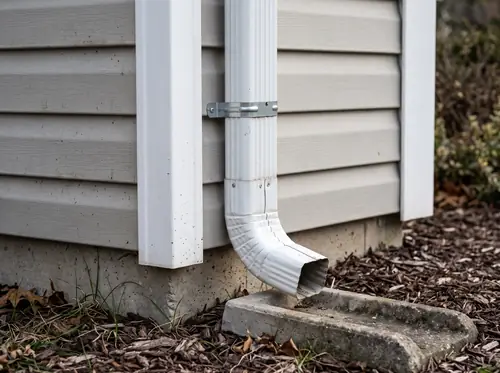
- Check that splash blocks slope away from the house.
Clay soils
Many soils around Baton Rouge are slow-draining clays that swell when wet and shrink in drought. Water dumped beside a slab soaks in close to the foundation and drains slowly. Moving it away keeps the ground around the house more even.
Common mistakes to avoid
- Assuming a drain line works because it did when the house was built.
- Piling yard debris or soil into a roadside ditch.
- Building a shed or fence on a drainage servitude.
- Pointing extensions toward a neighbor's yard.
Questions to ask a contractor
- Where will each downspout discharge?
- Will you test buried drain lines?
- Will you use solid pipe?
What a homeowner controls
You cannot change how much rain falls, but you can control where your roof water goes once it leaves the gutter:
- Keep downspouts connected and their extensions in place.
- Test drain lines every few years.
- Keep splash blocks sloping away from the slab.
- Keep the ditch and driveway culvert in front of your house clear.
- Avoid sending water across walks, toward the slab or to the neighbor.
In Baton Rouge and the Capital Region
The ditch and 311 details here are for Baton Rouge. St. George, Central, Zachary, Baker and the other parishes handle public drainage requests through their own offices.
When to do it
Plan drainage changes for drier months.
What to ask before you agree
Ask your local public works office whether a change affecting a ditch, culvert or servitude needs approval.
Related
See downspouts, downspout repair and overflowing gutters.